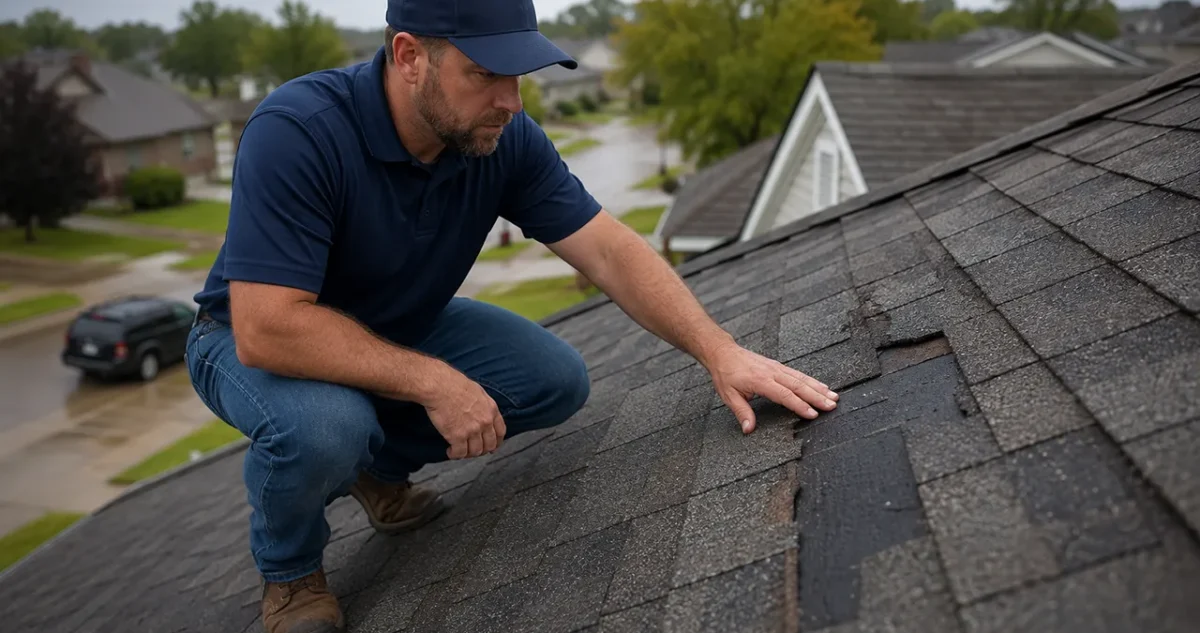
Strong winds, hail, heavy rain, and flying debris can all cause roof problems after a Wichita storm. Some damage is obvious right away. Other damage is easy to miss until water stains, missing shingles, or interior leaks show up later.
If you are searching for roof repair in Wichita KS after a recent storm, the first step is knowing what to look for safely from the ground. You do not need to climb on your roof to spot many warning signs. In fact, staying off the roof is usually the safer choice after severe weather, especially if shingles, decking, gutters, or tree limbs may be unstable.
At Dingers Roofing & Construction, our team helps homeowners throughout Wichita and nearby communities identify roof damage, understand repair options, and decide whether they need a simple fix, more extensive storm damage roof repair, or help with the insurance claim process.
Why Wichita Storms Can Be Hard on Your Roof
Wichita homeowners know how quickly Kansas weather can change. A calm afternoon can turn into high wind, hail, heavy rain, and severe thunderstorm warnings. According to thunderstorm safety guidance from the National Weather Service, severe storms can bring dangerous wind, lightning, hail, and flooding conditions.
Your roof is one of the first parts of your home to take the impact. Asphalt shingles, flashing, vents, ridge caps, gutters, and roof decking all work together to protect the structure underneath. When one part is damaged, water can find a path inside.
That is why storm damage should not be ignored. A small shingle issue today can turn into a roof leak, insulation damage, stained drywall, or wood rot if it is left untreated.
Signs You May Need Roof Repair After a Storm in Wichita
You can often spot early warning signs without getting on a ladder. Walk around your property when conditions are safe, then look at your roof, gutters, siding, windows, and yard from the ground.
1. Missing Shingles
Missing shingles are one of the clearest signs that your roof may need repair. High winds can lift, loosen, or tear shingles away from the roof surface. Once that protective layer is gone, the underlayment and decking may be exposed to rain.
If you see bare patches, uneven areas, or shingles in your yard, schedule a free roof inspection. Even one missing shingle can create a weak point where water may enter.
2. Lifted, Curled, or Creased Shingles
Not every damaged shingle blows off completely. Some shingles lift at the edges, curl upward, or develop creases where wind has bent them back. From the ground, these areas may look uneven, wavy, or raised compared to the rest of the roof.
Lifted shingles are a concern because they may no longer seal correctly. During the next rain, wind-driven water can push underneath them. If you notice this kind of damage, it is a good time to call a trusted local roofing company for roof repair in Wichita.
3. Granules in Gutters or Downspouts
Asphalt shingles have protective granules that help shield the roof from sunlight and weather. After hail or heavy storm impact, those granules can loosen and wash into the gutters.
Check the areas around your downspouts. If you see piles of dark, sand-like material, your shingles may have lost part of their protective surface. Some granule loss is normal as a roof ages, but sudden heavy loss after a storm can point to damage.
4. Dented Gutters, Vents, or Flashing
Hail often leaves dents on metal surfaces before roof damage becomes obvious. Look for dents on gutters, downspouts, roof vents, flashing, metal trim, and outdoor fixtures.
Dented metal does not automatically mean your roof needs replacement. However, it is a useful clue. If hail was strong enough to dent metal, it may also have bruised or fractured shingles.
5. Water Stains on Ceilings or Walls
Interior water stains are a sign that moisture may already be getting into your home. Stains often appear as brown, yellow, or gray marks on ceilings, walls, around light fixtures, or near upper corners of rooms.
A leak does not always appear directly below the damaged spot. Water can travel along rafters, insulation, or ceiling materials before it becomes visible. That is why a professional inspection matters. The source may be higher up the roof than the stain suggests.
6. Dripping Water or Active Leaks
If water is actively entering your home, do not wait. Move belongings away from the affected area, place a container under the drip if safe, and call for help. If the leak is connected to recent severe weather, Dingers Roofing & Construction offers 24/7 storm response for urgent storm-related roof damage.
For active leaks, the goal is to limit further damage and identify the source as quickly as possible. You can contact Dingers Roofing & Construction for help after a storm.
7. Debris on the Roof
Tree limbs, branches, and wind-blown debris can damage shingles, vents, flashing, and gutters. Even if the debris looks small, it may have scraped, punctured, or lifted part of the roof system.
Do not climb up to remove debris if the roof may be wet, damaged, or unstable. Instead, document what you can from the ground and request an inspection.
8. Loose or Damaged Flashing
Flashing protects vulnerable areas where the roof meets walls, chimneys, vents, valleys, and other transitions. Storms can loosen flashing or pull sealant away from these areas.
Because flashing protects common leak points, damage here should be handled quickly. A roofing professional can check whether the flashing can be repaired or whether nearby shingles also need attention.
What Not to Do After Storm Damage
After a storm, it is natural to want answers right away. However, some actions can make the situation more dangerous or more expensive.
- Do not climb on a wet or damaged roof.
- Do not pull up shingles to check underneath them.
- Do not ignore interior stains, even if they seem small.
- Do not assume hail damage is harmless because there is no leak yet.
- Do not wait weeks to document damage if you may need insurance claim support.
Instead, take photos from the ground, note the storm date if you know it, and schedule a professional roof inspection. This gives you a clearer record of what happened and what needs to be repaired.
Roof Repair or Roof Replacement: How Do You Know?
Many storm-damaged roofs can be repaired. Others may need a larger solution, especially if the roof is older, damage is widespread, or the same areas have been repaired before.
A repair may be enough when damage is limited to a small section, a few shingles, minor flashing problems, or a specific leak source. Replacement may make more sense when there is broad hail impact, repeated leaks, brittle shingles, widespread granule loss, or damage across multiple roof slopes.
The best way to know if you need roof repair or roof replacement is through a professional inspection. Dingers Roofing & Construction can assess the roof, explain what we find, and help you understand the practical next step. If the damage may involve your homeowners insurance, our team can also provide roof insurance claim guidance so you know what information to gather before speaking with your carrier.
Why a Free Roof Inspection Matters After a Wichita Storm
Storm damage is not always visible from the ground. Hail bruising, seal damage, lifted shingles, nail pops, damaged flashing, and hidden leak paths may require a trained eye.
During a roof inspection, Dingers Roofing & Construction looks for signs such as:
- Missing, lifted, creased, or torn shingles
- Granule loss and hail impact marks
- Damaged ridge caps and roof edges
- Loose or damaged flashing
- Leaks around vents, valleys, chimneys, and penetrations
- Gutter and downspout damage
- Debris impact or tree-related damage
- Potential signs of water intrusion
After the inspection, you will have a better understanding of whether your roof needs repair, replacement, or continued monitoring. You can also make a more informed decision before small issues become larger problems.
Why Wichita Homeowners Call Dingers Roofing & Construction
Dingers Roofing & Construction is a local Wichita roofing company serving homeowners throughout Wichita, Andover, Derby, Valley Center, Park City, Bel Aire, Maize, Goddard, Haysville, Clearwater, Augusta, Andale, Schulte, Conway Springs, Viola, Garden Plain, El Dorado, Douglass, Rose Hill, Mulvane, and nearby communities.
Homeowners choose Dingers because our team understands Kansas storm damage, residential roofing systems, and the importance of honest inspections. We are highly rated on Google, hold an A+ rating with BBB, and focus on helping homeowners make confident decisions about roof repair, replacement, and storm restoration.
Whether you have missing shingles, a new leak, visible hail damage, or questions about your roof after a storm, our professional roof inspectors can take a closer look.
Schedule Roof Repair Help in Wichita, KS
If your home may need roof repair after a storm, do not wait for the next heavy rain to find out. Dingers Roofing & Construction can inspect your roof, explain the damage, and recommend the right next step.
Schedule a Free Roof Inspection if you notice missing shingles, lifted shingles, leaks, granules in your gutters, dented metal, or storm debris on your roof.
You can also request a free estimate or call for 24/7 storm response when urgent storm damage needs attention.
FAQs About Roof Repair After a Wichita Storm
How soon should I schedule a roof inspection after a storm?
You should schedule a roof inspection as soon as it is safe after the storm has passed. Prompt inspections help identify damage early and create a clearer record of what happened.
Can I check for roof damage myself?
You can look for visible signs from the ground, such as missing shingles, debris, dented gutters, and interior water stains. However, you should not climb onto a storm-damaged roof. A professional inspection is safer and more thorough.
Does storm damage always mean I need a new roof?
No. Some storm damage can be repaired. The right solution depends on the age of the roof, the type of damage, how widespread it is, and whether water has entered the home.
What should I do if my roof is leaking after a storm?
Move belongings away from the leak if it is safe, document the damage with photos, and contact a roofing professional. For urgent storm-related leaks, Dingers Roofing & Construction offers 24/7 storm response.
Can Dingers help with roof insurance claim questions?
Yes. Dingers Roofing & Construction can inspect your roof, document visible damage, and explain what information may be helpful as you communicate with your insurance carrier.